Feeling flat
Does a Dopamine Detox Work?
The honest answer, minus the hype. Why the weekend reset doesn’t touch it, why cutting out everything you enjoy makes it worse, and the one move that actually starts to work.
You’ve seen the videos. Delete the apps, cut the sugar, no music, no screens, sit in your boredom for a day or a week, and supposedly your brain resets and everything feels good again.
You’re asking the honest question: does any of that actually work? You’re asking because the flatness is real. The things you used to enjoy have gone gray, and if you’re honest with yourself, you already know which one habit did most of it, even if you’ve never said it out loud.
So here’s the straight answer, before the hype. A weekend of staring at a wall will not fix this, and the popular version of a “dopamine detox” gets the whole thing wrong in a few specific ways. But there is a real idea buried underneath it, and that part does work. Here’s where the fad falls apart, and what actually moves the needle.
Myth: “You can reset your dopamine in a weekend.”
This is the headline promise, and it’s the first thing to put down. Your brain does not have a dopamine tank that you drain over a weekend and refill by Monday, good as new.
The flatness didn’t arrive in a weekend, so it isn’t leaving in one. It built slowly, over months or years, as one particular habit trained your reward system to expect a big, easy hit and to treat everything slower and quieter as not worth the effort. That training is what dulled the rest of your life. A single day offline does not undo a pattern that deep. What actually recalibrates the system is going long enough without the overload, over and over, until it stops bracing for it. That takes weeks of real change, not one heroic Saturday.
And the 24-hour version does real harm, because when the weekend ends and you still feel flat, you decide the flatness is permanent and you quit. It was never going to show results that fast.
Myth: “Cut out everything that gives you dopamine.”
This is the version that has you quitting music, walks, good food, coffee, and friends all at once, as if pleasure itself were the enemy.
It backfires, and it backfires hard. You do not have a problem with a good meal, or a walk in the sun, or a real conversation. Those are the slow, healthy pleasures the flatness already stole from you, and stripping them away resets nothing. It just makes a numb life emptier, which is the exact feeling that drives you back to the one habit in the first place.
That’s the thing the blanket detox gets wrong. The overload came from ONE source, the one you already know, not from music or food or people. Lumping the good pleasures in with the one that’s hurting you is like starving yourself to fix a junk-food habit. The real move runs the other way: take out the single overloader, and guard the quiet pleasures instead of banning them.
A detox that cuts music, walks, and good food is cutting the wrong thing. Those were never the problem. They are the things the problem took from you in the first place.
Myth: “Grit out thirty days and you’ll be cured.”
The countdown version. Mark the calendar, hold a streak by force, and when you hit the number you’re fixed.
Two things sink that version of it. First, simply not doing the thing, through sheer force, leaves the trigger fully intact. The hour, the quiet, the room, the phone in your hand, all of it still fires the old pull, and willpower is the one tool that can’t reach down and switch that off. That isn’t retraining anything. It is holding your breath and calling it progress. Second, the streak sets its own trap. The day you slip, and on willpower alone you eventually will, the counter reads zero and a voice says “well, it’s ruined now, might as well.” That one sentence turns a single slip into a lost week. There was never a streak to protect in the first place, and tomorrow is still available.
Myth: “When it works, you’ll feel amazing.”
The influencer promise of the clean-brain high, the euphoria waiting on the far side of the detox. It quietly sets you up to quit.
The first stretch actually feels worse, not better. When you stop feeding a trained pattern, the old circuit protests, loudly, and the early days can feel restless and low and bored out of your skull. That discomfort is not the sign it’s failing. It’s the exact sound of the thing retraining. And there is no single morning you wake up cured either. The good stuff comes back gradually and quietly, a little more color week by week, never in one cinematic switch-flip. People who are promised euphoria quit at day four when it doesn’t arrive, right before the part where it slowly does.
What a real reset actually looks like (start here)
So the fad fails, but the honest idea underneath it is sound: give your reward system a long break from the one thing that’s overloading it. The real version isn’t a detox from everything. It’s a swap, and here’s the first move.
Subtract one, add one. Take the single overloader’s easiest cue apart, so you’re not leaning on willpower: move the device out of the room at the hour it usually fires, change where you sit, break the setup that runs on rails. Then, in the same week, put one slow pleasure deliberately back on the calendar and actually do it. A walk, a real meal cooked slowly, a person you’ve been meaning to see, a book. Guard it like it matters, because a numb reward system turns back up when you feed it real, slower rewards, not when you starve it of all of them.
That’s the whole shape of it in miniature. Not a wall to stare at for a weekend. One thing out, one real thing back in, repeated until the system relearns what it forgot.
You don’t reset by removing everything. You reset by removing the one thing, and letting the real pleasures back in.
Where this goes next
So, does a dopamine detox work? The version in the videos does not. The weekend reset, the blanket ban on everything you enjoy, the white-knuckle streak, the promised high, all of it misreads the problem. The real idea underneath, take out the one overloader and retrain the system while feeding it real pleasure, does.
Knowing that much loosens the fad’s grip. But actually retraining a pattern that’s years deep takes steps, and a plan for the nights it’s hardest, and that’s more than one article.
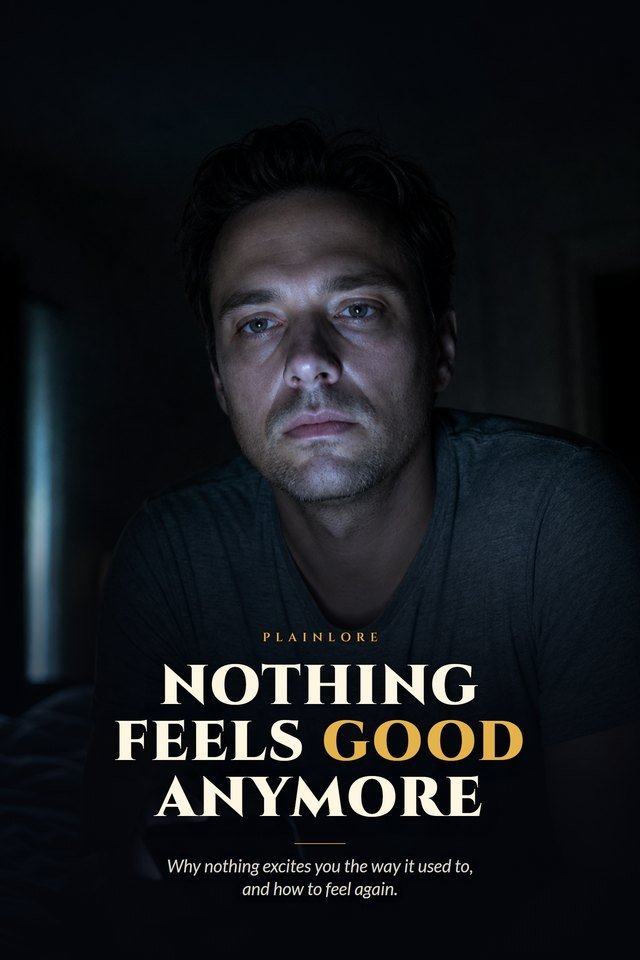
That’s what I wrote Nothing Feels Good Anymore for.
It’s the full version of everything here, the whole map and the way out. Every part is built on real published research that’s listed at the back so you can check it yourself. It walks the whole thing in six steps, from taking the cues apart, to riding out the urges without white-knuckling them, to putting something real back where the flatness is. Then there’s a printable workbook to actually do it with, including the card for the nights it goes wrong, because reading changes how you see things and only doing changes how you feel.
It will not shame you, lecture you, or promise you a number of days. It gives you the mechanism and a system built around how it actually works.